Ensuring Excellence in Medical Courier Services: Best Practices and Compliance
Medical courier services are integral to the healthcare sector, ensuring the timely and secure transportation of medical specimens, pharmaceuticals, and supplies. Their role is pivotal in maintaining the integrity of medical deliveries, which directly impacts patient care and diagnostic accuracy.
The Critical Role of Medical Courier Services
Medical couriers specialize in transporting sensitive medical materials, including lab specimens, blood products, tissue samples, and diagnostic materials. They operate under strict protocols to ensure compliance with healthcare regulations and maintain the quality of the items in transit. This includes adhering to U.S. Department of Transportation (DOT), OSHA, and HIPAA mandates, which govern the safe and secure handling of medical materials. (cargo.health)
HIPAA Compliance and Chain of Custody
The Health Insurance Portability and Accountability Act (HIPAA) sets the standard for protecting sensitive patient information. Medical couriers must ensure that all deliveries comply with HIPAA regulations, safeguarding protected health information (PHI) throughout the transportation process. This involves secure packaging, encrypted communication systems, and maintaining a documented chain of custody. Couriers are trained to handle PHI with the utmost confidentiality, ensuring that all interactions and deliveries uphold patient privacy. (waysmessenger.com)
Specimen Transport Best Practices
Proper handling of medical specimens is crucial for accurate diagnostics and patient safety. Couriers must follow best practices for specimen collection, packaging, and transportation, including:
-
Specimen Collection Protocols: Ensuring that biological samples are collected in a manner that maintains their integrity and prevents contamination.
-
Packaging and Labeling Standards: Complying with DOT and IATA regulations for Category A and B infectious substances, ensuring that specimens are securely packaged and clearly labeled.
-
Chain of Custody Procedures: Maintaining secure and documented transfer of medical materials, ensuring accountability and traceability.
-
Infection Control and Safety: Implementing measures to prevent exposure to hazardous materials during transportation.
-
Temperature-Controlled Transport: Maintaining sample stability for accurate test results by adhering to validated cold chain protocols. (training-hipaa.net)
Temperature-Controlled Delivery
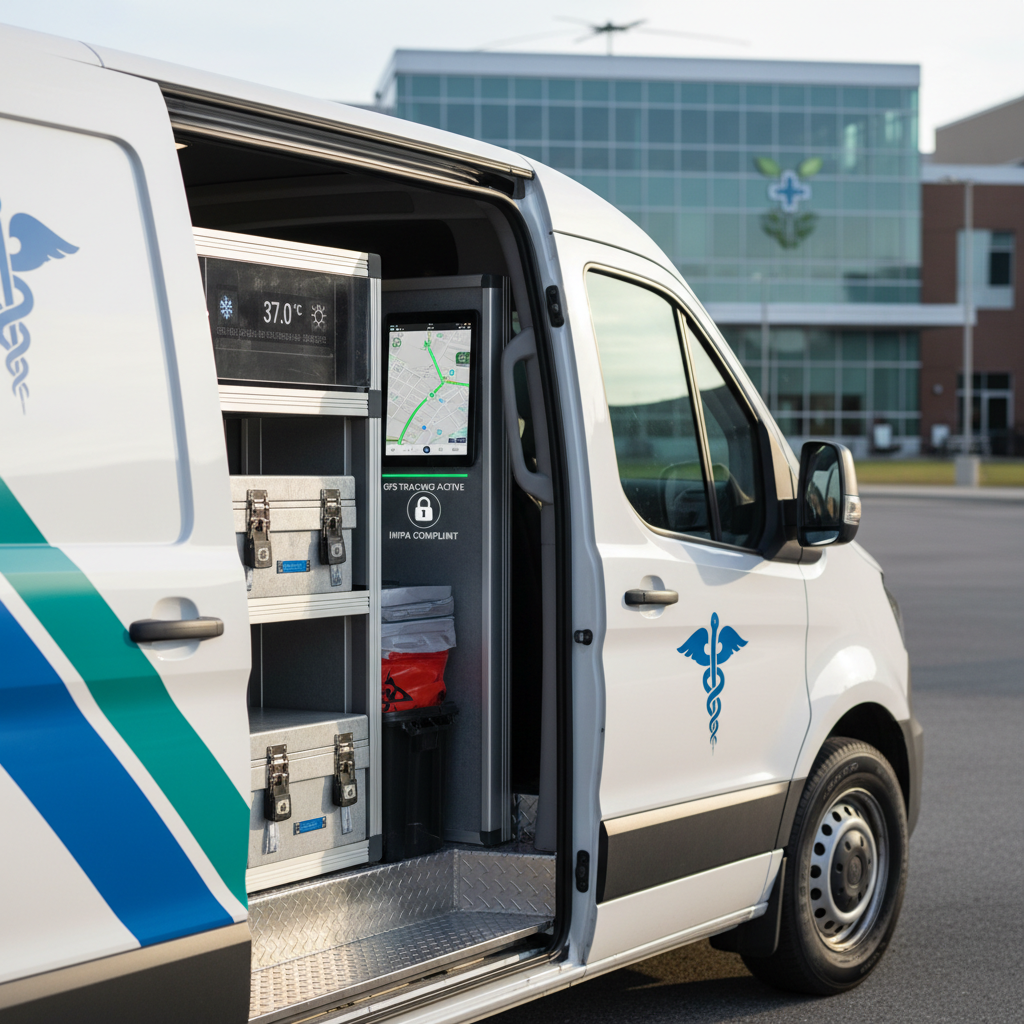
Many medical specimens and pharmaceuticals are sensitive to temperature fluctuations, which can compromise their efficacy. Medical couriers utilize insulated transport kits, gel packs, and thermal monitoring to ensure adherence to validated cold chain protocols. Real-time temperature tracking systems alert stakeholders to potential deviations before they compromise clinical utility, safeguarding the quality of temperature-sensitive deliveries. (cargo.health)
Technological Advancements in Medical Courier Services
Advancements in technology have significantly refined medical logistics, driving precision, efficiency, and enhanced operational transparency. Real-time GPS tracking systems and IoT-enabled cold chain solutions provide granular oversight throughout the delivery process, ensuring that critical medical supplies arrive within required timeframes and under optimal conditions. These systems mitigate delays and errors by facilitating proactive interventions when deviations occur, such as temperature fluctuations or unexpected route changes. (cargo.health)
Ensuring Compliance with Industry Regulations
Medical deliveries are subject to strict industry regulations, including HIPAA, OSHA, and DOT guidelines. Couriers must adhere to these regulations to ensure the safety and integrity of medical materials in transit. This includes proper packaging and labeling, maintaining a documented chain of custody, and implementing safety standards such as DOT hazmat training and OSHA bloodborne pathogen certification. (stratusgov.com)
Case Studies and Real-World Applications
In a recent study, researchers proposed a two-index mixed-integer programming formulation to address the collection and delivery problem of biomedical specimens. This approach aims to minimize the total completion time of delivery requests, highlighting the importance of efficient logistics in healthcare. (arxiv.org)
Tips for Healthcare Facilities
Healthcare facilities can enhance the effectiveness of medical courier services by:
-
Selecting Experienced Couriers: Choose couriers with a proven track record in handling medical deliveries and compliance with industry regulations.
-
Establishing Clear Protocols: Develop and communicate clear protocols for specimen collection, packaging, and transportation to ensure consistency and reliability.
-
Implementing Real-Time Tracking: Utilize courier services that offer real-time tracking and monitoring to maintain oversight of deliveries.
-
Regular Training: Ensure that staff involved in specimen collection and handling are regularly trained on best practices and compliance requirements.
By adhering to these practices, healthcare facilities can ensure the safe and efficient transportation of medical materials, ultimately supporting better patient outcomes.
In conclusion, medical courier services are a vital component of healthcare logistics, ensuring the secure and timely delivery of medical specimens and supplies. By focusing on compliance, best practices, and technological advancements, these services contribute significantly to the quality of patient care and the efficiency of healthcare operations.